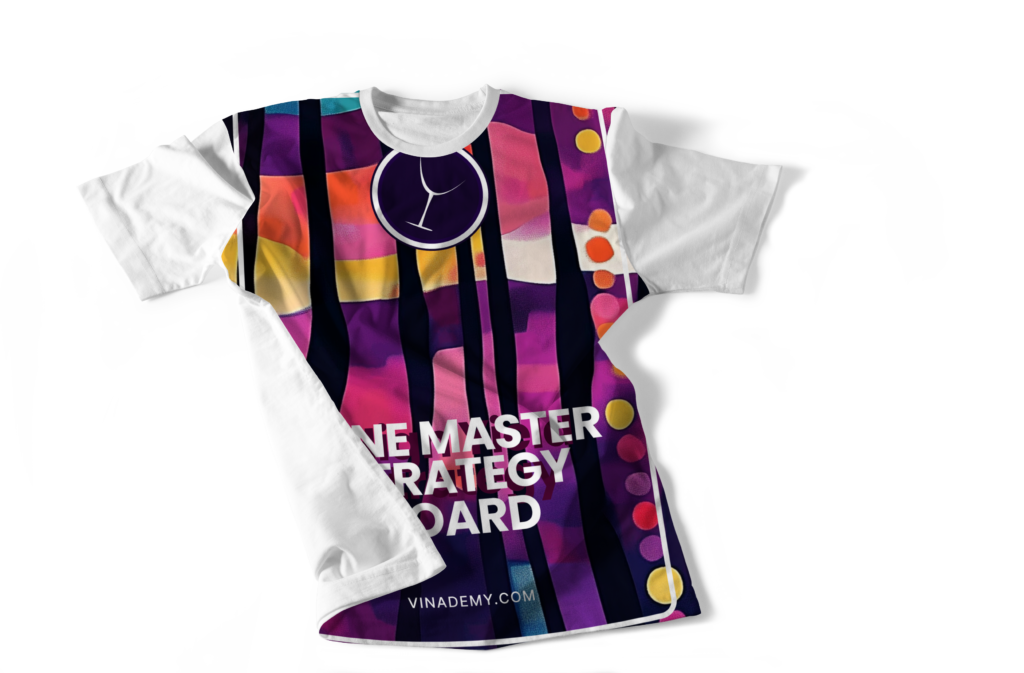

Wine Master Strategy.
Strategic Wine Learning Tool
Una herramienta educativo de estrategia go-to-market en el que cada participante dirige una bodega y construye un vino desde cero: terroir, viticultura, elaboración, estilo y mercado.
Board and cardsIn groupsWorkshops and classesSystemic thinking

Loading Wine Master Strategy…
Why it exists
Wine is a complex system. But it's almost always learned in isolated pieces.
Behind every bottle is a network of connected decisions: climate conditions ripening, soil influences vigour, viticulture defines balance, oenology builds style, and the market determines viability.
Traditional learning fragments this knowledge: regions, varieties, and techniques are studied, but the ability to integrate everything into a coherent decision is rarely trained.
How you train
Learning about wine isn't about memorising, it's about deciding.
01
Receive your scenario
Climate, soil, and variety: three cards define your winery’s terroir. You don’t choose them; they’re assigned to you.
02
Define your strategy
Target market, price, and channel. Before touching the vineyard, you decide who you want to reach and how.
03
Play the rounds
Viticulture, winemaking, investment, market, critics, and unexpected events: in each round, you choose, justify, and adapt.
04
Defend your wine
At the end, each player summarises the game and explains what they did, why they did it, and what result they achieved. This is where learning is consolidated.


The Game
Before the first decision, there's already a context.
Act 1 · The Scenario
You are assigned a terroir.
The game begins with three cards that define your starting point: climate, soil, and variety. You don't choose them: they're assigned to you, just as a winery is assigned its place in the world.
Everything you do afterwards must be consistent with them.
- Clima Climate
- Suelo Soil
- Variedad Variety


Act 2 · The Strategy
You decide who to target, at what price, and through which channel.
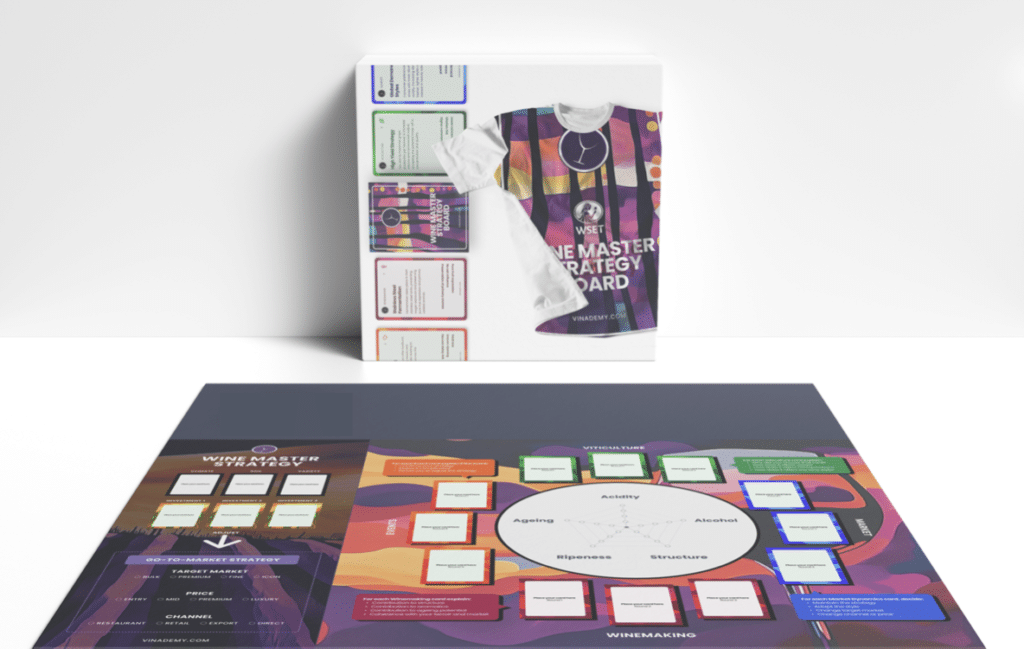
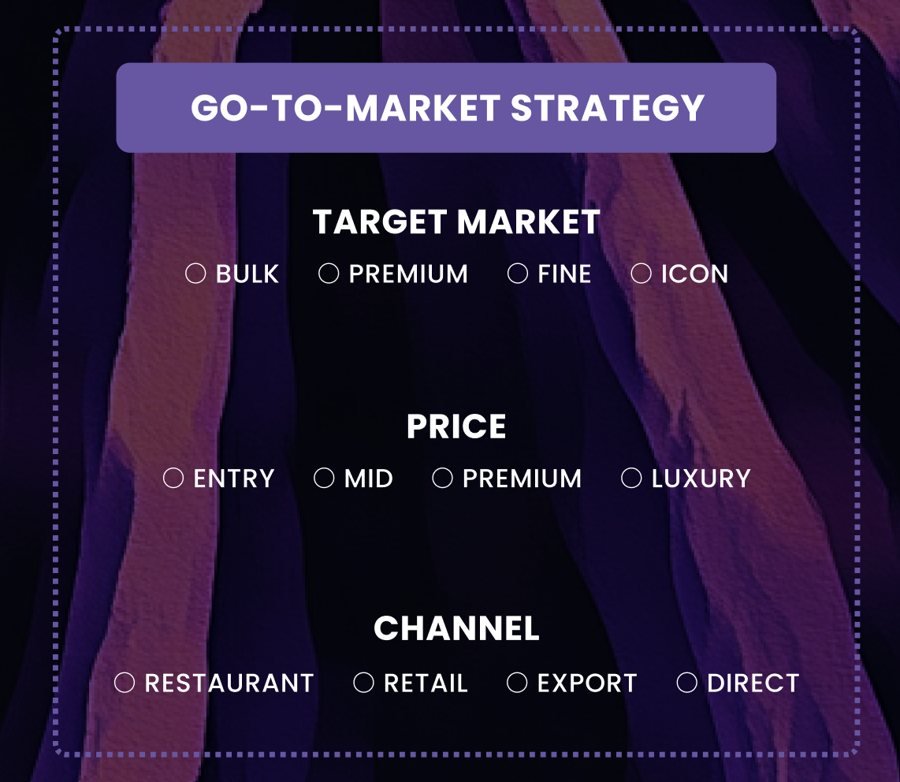
Before touching the vineyard, you define your market entry strategy on the board: the segment you're targeting, the price range, and the sales channel.
This is the compass that will give meaning, or not, to every technical decision you make afterwards.
- Mercado objetivo Target market
- BulkPremiumFineIcon
- Precio Price
- Entry-levelMid-rangePremiumLuxury
- Canal Channel
- RestaurantRetailExportDirect sales
Act 3With the scenario and strategy on the table, the rounds begin.
Act 3 · The Rounds
Six types of cards, one single system.
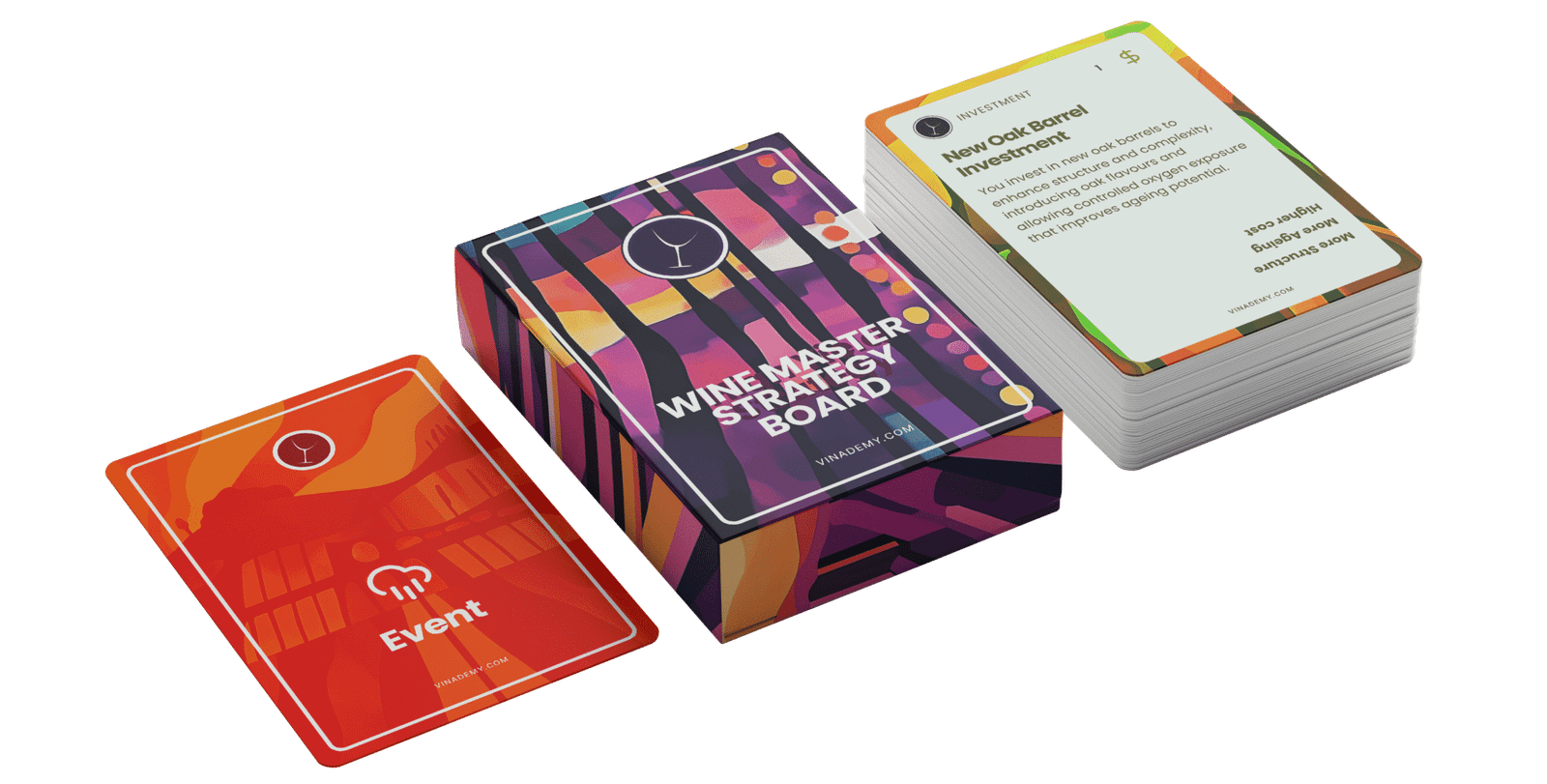
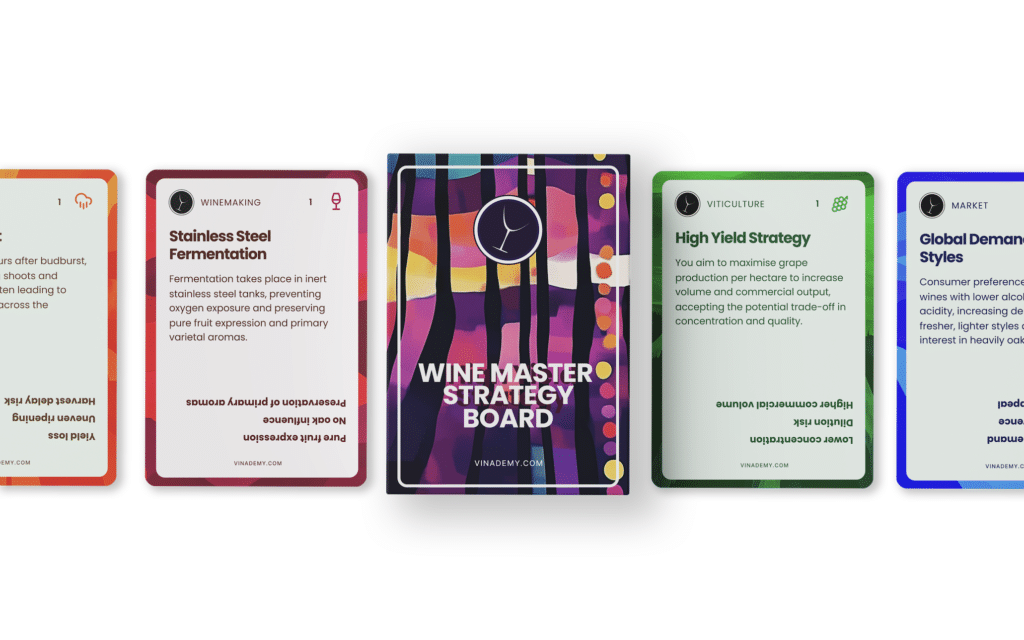
In each round, you play cards from six decks, and each represents a part of the wine value chain. The game consists of combining them coherently, respecting your scenario and strategy.
ViticulturaViticultureDecisions in the vineyard: yields, management, and harvest time.
ElaboraciónWinemakingCellar techniques that build the wine's style.
MercadoMarketTrends and demand that change the value of what you produce.
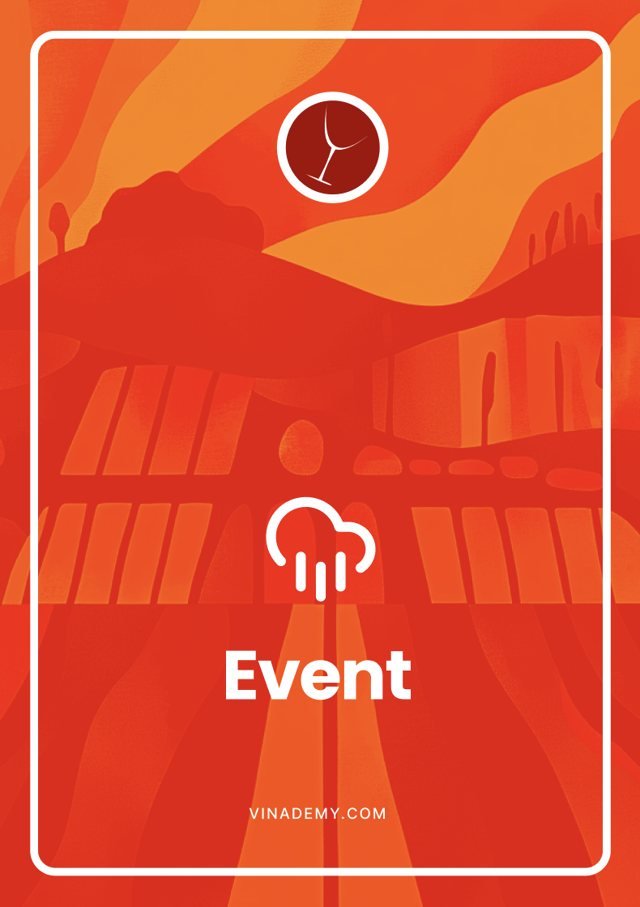
EventoEventThe unexpected: weather, production, or unforeseen events that force adaptation.
CríticaCriticReviews and scores that influence your wine's reputation.
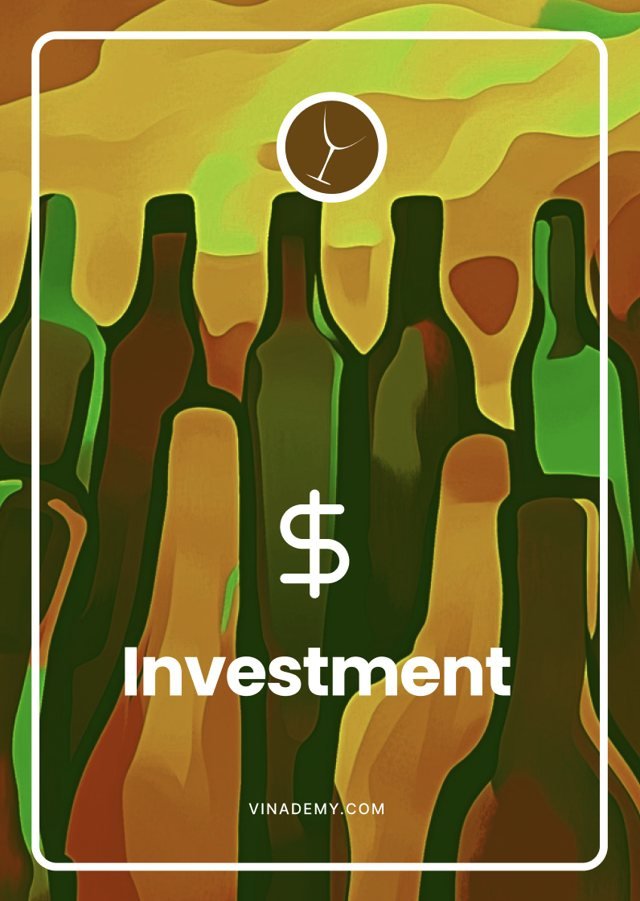
InversiónInvestmentResources and gambles, like a new barrel, with its cost and return.
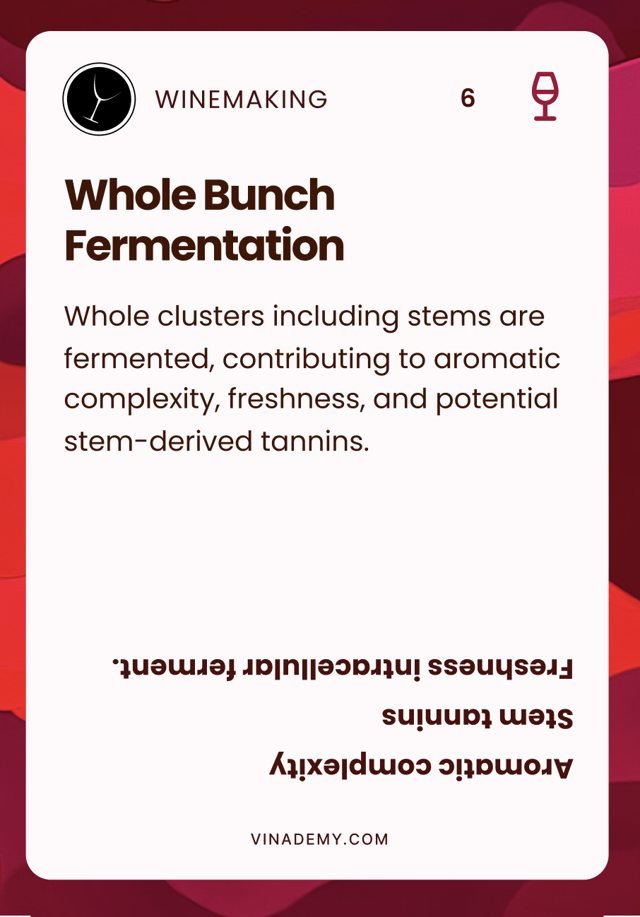
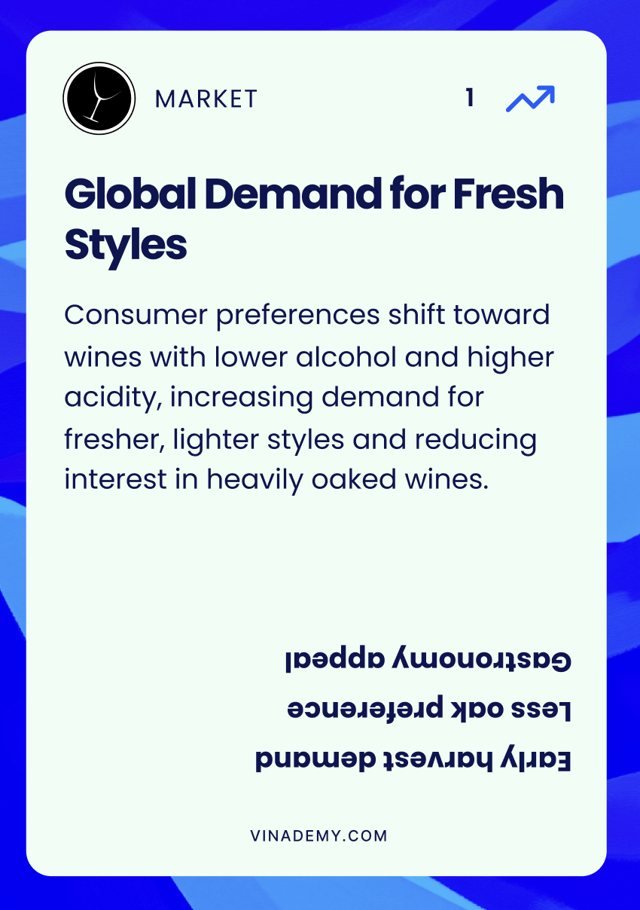
Anatomy of a card
Each card is a decision with consequences.
- Type and valueWhich part of the system it belongs to and how much it weighs in the game.
- The decisionWhat you choose to do: ferment with whole bunches, respond to demand for fresh wines…
- What happensA brief, technical explanation of its effect on the wine.
- EffectsThe consequences you'll have to defend at the end of the game.
1234The wine's style
Wine doesn't just 'happen': it's built.
Every decision in the game affects five dimensions of style. Choosing an early harvest, reducing yields, using new oak, or avoiding malolactic fermentation ceases to be a fact to memorise and becomes a tool to achieve an objective.
- Acidity
- Alcohol
- Structure
- Aromatic intensity
- Ageing potential

There are no good or bad decisions in absolute terms. Only coherent or incoherent with the context.
Act 4 · The Defence
The board structures the game. Reflection solidifies what's learned.
Every decision is explained, every choice is justified, and every adjustment is understood. This activates information retrieval, thought organisation, and knowledge consolidation.
- Coherence MatrixThe player records the logic behind each action during the game.
- Wine DefenceThe final phase: summarising the game in a coherent discourse about what, why, and with what result.
- Designed with cognitive scienceActive learning, retrieval practice, continuous feedback, and knowledge built from experience, integrated into the game dynamics.
What it trains
Thinking about wine as a system.
Wine as a system
A decision in the vineyard doesn’t end in the vineyard: it affects style, ageing, positioning, and viability. It’s not about knowing what oak contributes, but when, why, and how to use it.
Deciding under uncertainty
In reality, decisions aren’t made in controlled environments, but with incomplete information and under pressure. The game trains this ability, which extends far beyond wine.
The strategic dimension
Who your wine is aimed at, through which channel it’s sold, and at what price point it’s positioned. A technically impeccable wine loses value if it doesn’t find its place in the market.

More than a tool
A multi-layered educational ecosystem.
Wine Master Strategy is the core experience of a system that expands with complementary resources to develop critical thinking, knowledge transfer, and decision-making capacity in different contexts.
Coherence MatrixStructured defence sheetsConcept mapsMind mapsAdvanced thematic modulesStudy routinesAI Assistants · coming soon


Part of Vinademy Labs
Three ways to train: what you know, what you perceive, and how you decide.
Wine Master Strategy
Training with your team or class?
Write to us and we’ll design the session with you: masterclass, workshop, team training, or a bespoke programme.
Created by Luciano Wehrli · Wine Education Innovation Strategist · DipWSET
EventoEvent
CríticaCritic
InversiónInvestment